The customer with the highest revenue usually gets the most attention.
The fastest response.
The most flexibility.
The most internal room.
One more exception.
One more urgent request.
One more pricing agreement “because we’ve been working together for years”.
That makes sense.
It is an important customer, after all.
But that is not the same as being a good customer.
Revenue is a lazy metric.
It tells you nothing about how much discount you give. Nothing about how much service quietly gets added on top. Nothing about how much extra work that customer creates in planning, administration or operations. And certainly nothing about what is actually left in the end.
Don't confuse volume for value
That is the mistake many companies make.
They confuse volume with value.
You see the exact same thing in large companies. In 2025, UPS decided to significantly reduce its Amazon volume. Not because Amazon was not a major customer. But because UPS deliberately wanted to become less dependent on volume that did too little for profitability.
Closer to home, you see the same logic. In early 2024, Carrefour pulled PepsiCo products from its shelves in several countries, including Belgium, because it considered the price increases unacceptable. On paper, that is an important commercial relationship. In practice, a relationship like that becomes a problem as soon as price and margin fall out of balance.
Even Procter & Gamble states in its annual report that further concentration among large retail customers can create additional cost and margin pressure. In other words, the bigger the customer, the greater the pressure often becomes on terms, pricing and profitability.
And still, many SMEs continue to rank their customers mainly by revenue.
That is understandable. Revenue is visible. Margin is more confronting.
Because once you really start looking, you often see something uncomfortable.
The customers who demand the most attention are not always the customers who contribute the most.
Some customers buy a lot, but eat away at your profit. Others buy less, but move through your organisation far more smoothly. Less friction. Fewer exceptions. More discipline. More return.
That second group rarely gets the most attention.
The first group usually does.
That is exactly why companies suddenly run into so-called unexpected problems when times get tougher.
Not because the market suddenly becomes difficult. But because weak decisions stay hidden much longer in good times.
So the question is not just who your biggest customers are.
The better question is: which customers truly deserve their place in your organisation today?
Who contributes to your result?
Who consumes capacity?
Who keeps getting exceptions that have slowly become normal?
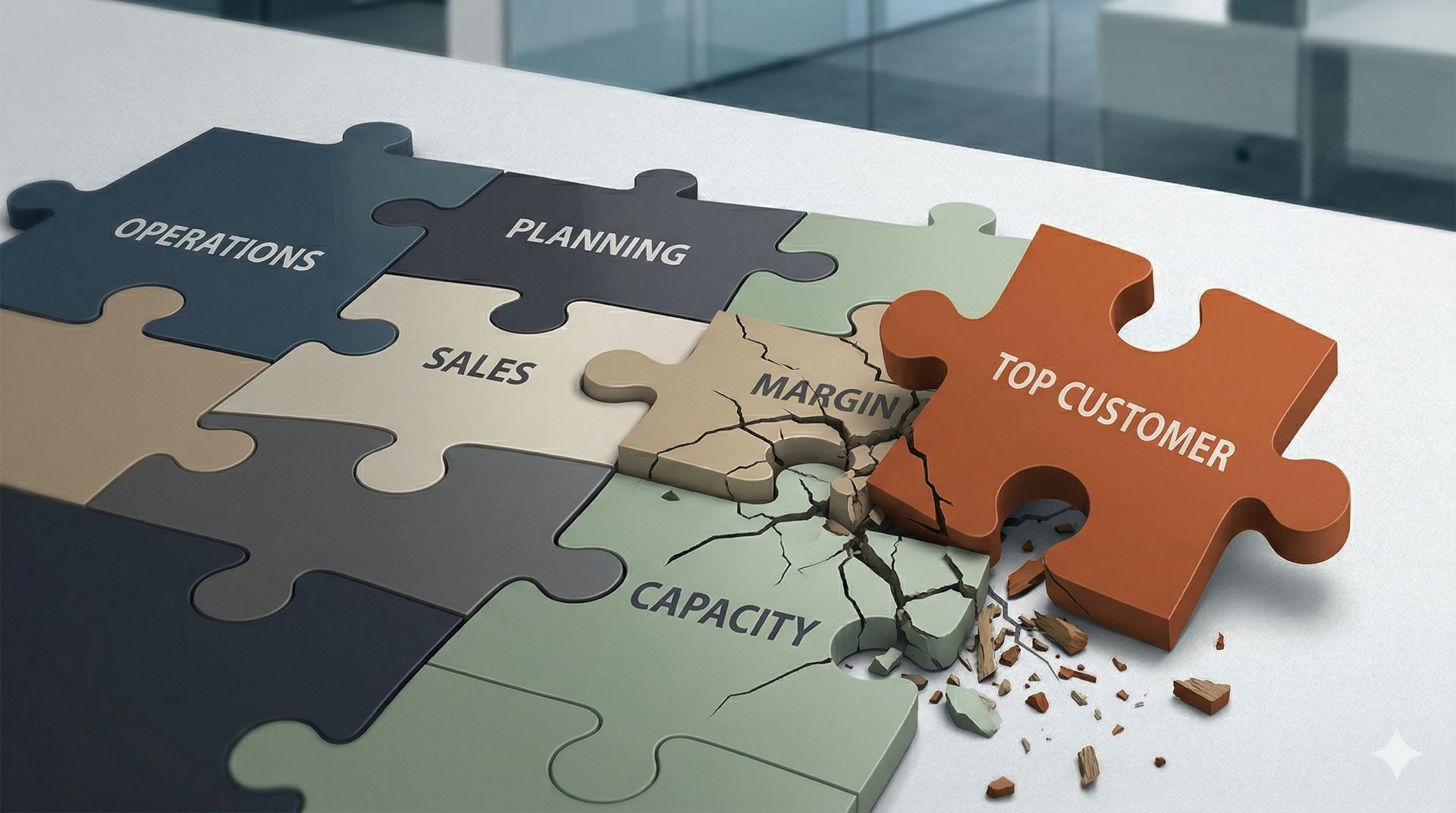
Because a large customer that erodes your margin, puts pressure on your operation and weakens your bottom-line is not your best customer.
It is simply your biggest one.
Maybe it is time to evaluate customers not only by revenue, but also by what they truly contribute. Companies that get that right usually make better decisions.
Contact us if want to start working on this.